If you’ve ever climbed aboard a scenic flight, there’s a good chance you’ve experienced a small piece of Cessna aircraft history without even realizing it. For more than a century, Cessna aircraft have earned a reputation for reliability, thoughtful design, and helping people discover the world from above. Whether they’re introducing a student pilot to aviation or carrying guests over mountain ranges and glaciers, their story is one of curiosity, innovation, and a passion for flight.
That story begins in Kansas with a farmer who simply wanted to build an airplane.
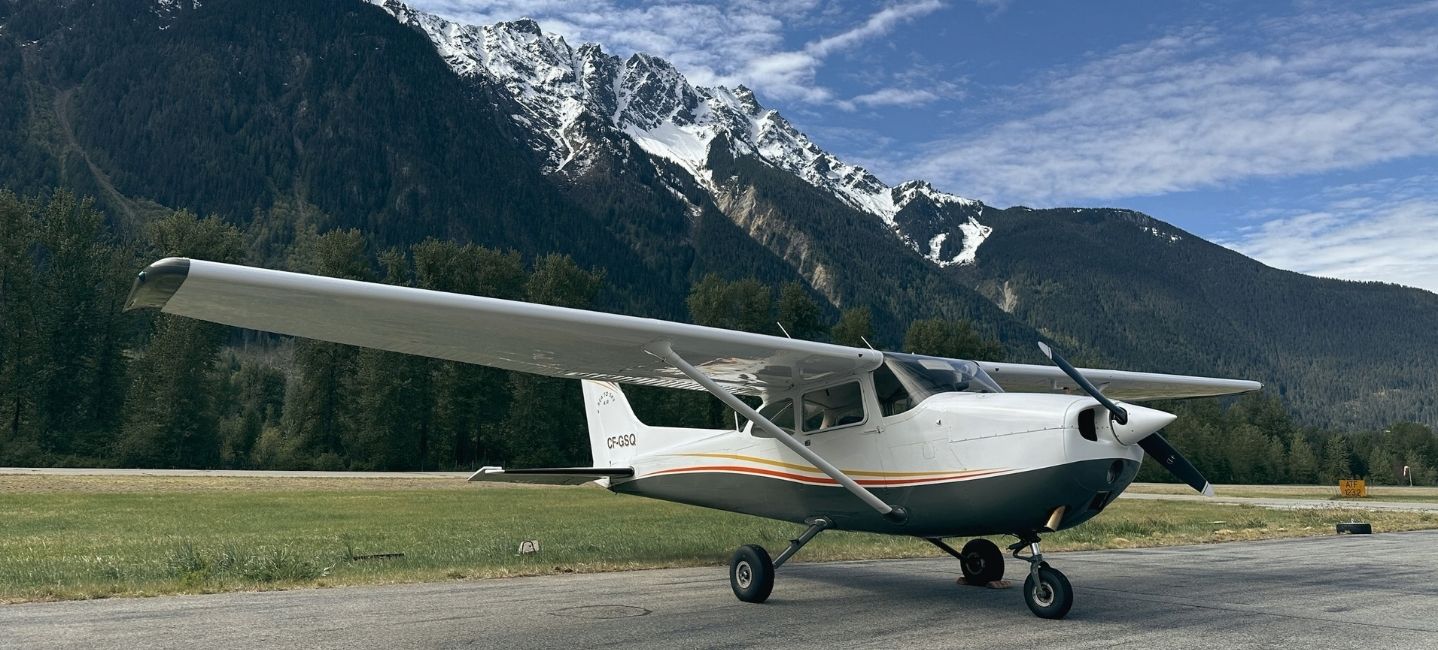
In 1911, Kansas farmer Clyde Cessna attended a flying exhibition in Oklahoma City. Inspired by what he saw, he decided to build an aircraft of his own. At the time, aviation was still in its earliest years, and building an airplane required determination, creativity, and plenty of trial and error. Clyde Cessna went on to design and fly one of the earliest monoplanes in the American Midwest, helping establish himself as one of the region’s aviation pioneers (Cessna, n.d.; Kansas Historical Society, n.d.).
His passion for flight continued to grow, and in 1927, he partnered with Victor Roos to establish the Cessna Aircraft Corporation. Their first production aircraft, the Cessna Model A, introduced a high-wing configuration that would become one of the company’s defining design features (Cessna, n.d.).
More than 100 years later, that same spirit of innovation continues to shape every Cessna aircraft.

One of the easiest ways to recognize a Cessna aircraft is by looking at where the wings are positioned.
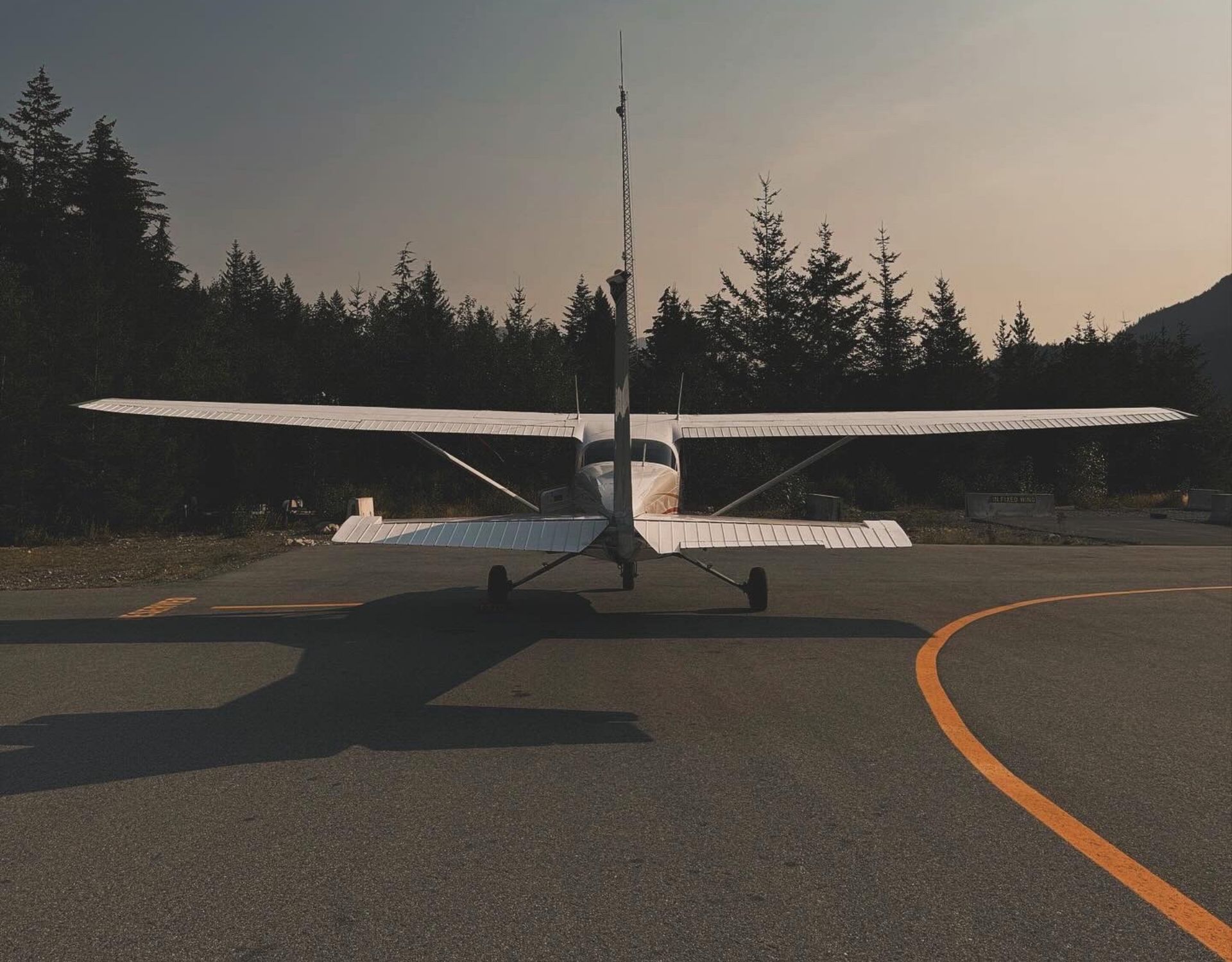
Unlike many aircraft that mount their wings lower on the fuselage, Cessna’s signature design places the wings above the cabin. This high-wing configuration first appeared on the Model A and quickly became one of the company’s most recognizable characteristics (Cessna, n.d.).
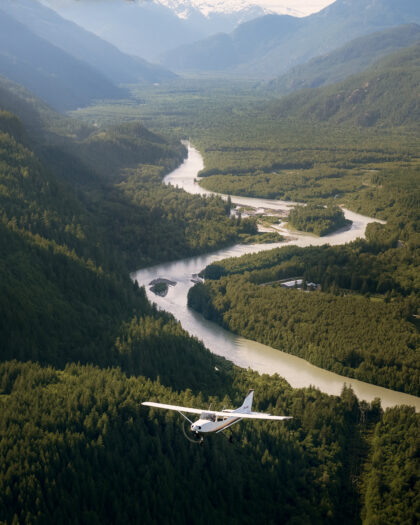
The design offers several practical advantages. Pilots appreciate the aircraft’s predictable handling and excellent visibility, while passengers enjoy unobstructed views of the landscape below. For scenic flying, that perspective makes all the difference. Looking down over mountain valleys, winding rivers, alpine lakes, and glaciers creates a much stronger connection to the landscape than viewing it from the ground alone.
It’s a design that has remained remarkably consistent for nearly a century because it simply works.
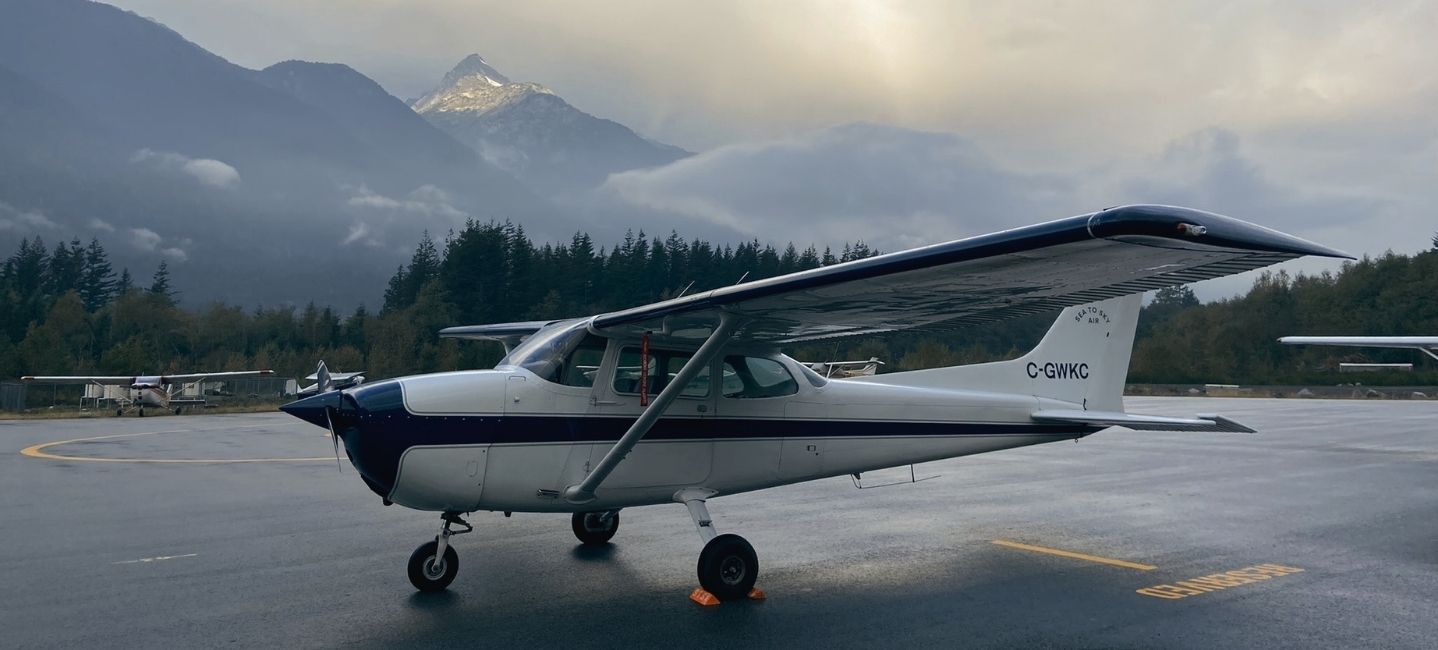
Aircraft technology has changed dramatically since the early 1900s, yet Cessna has continued to build airplanes trusted by pilots around the world.
Over its history, the company has produced more than 200,000 aircraft, making it one of the most influential manufacturers in general aviation. Among those aircraft is the legendary Cessna 172 Skyhawk, first introduced in 1955. With more than 44,000 built, it remains the most-produced aircraft in aviation history (Textron Aviation, n.d.).
The Cessna 150 and 152 have also played an important role in aviation, with more than 31,000 aircraft built between the two models. For decades, these dependable airplanes have introduced new pilots to flying while helping experienced aviators continue exploring the skies.
These milestones are more than impressive statistics. They reflect a long-standing commitment to dependable engineering and practical design, qualities that continue to make Cessna aircraft a trusted choice across the aviation industry.
The aviation industry has introduced countless new aircraft over the past century, yet Cessna continues to hold a unique place in the skies.
Part of that success comes from versatility. Cessna aircraft are equally at home training student pilots, supporting aerial photography, connecting remote communities, and providing unforgettable scenic flights. Their stable handling and dependable performance have earned the confidence of pilots around the world, while their thoughtful design helps passengers relax and enjoy the journey.
That combination of reliability and visibility has made Cessna aircraft especially well suited to sightseeing, where the experience is about much more than simply getting from one place to another.

Every scenic flight is shaped by two things: the landscape below and the aircraft that carries you there.
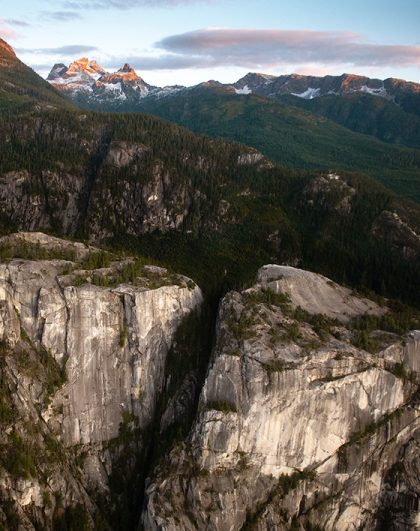
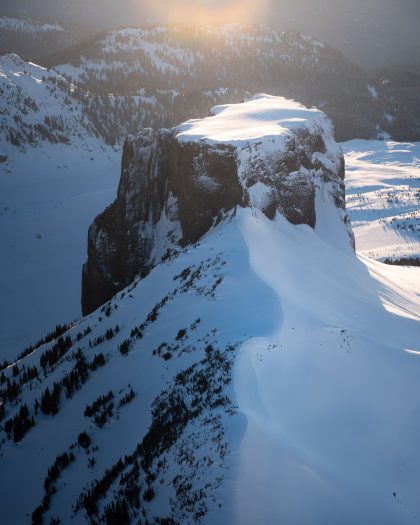
The Sea to Sky corridor is filled with dramatic mountain ranges, turquoise alpine lakes, winding rivers, and glaciers that are difficult to fully appreciate from the ground. Seeing these landscapes from above offers a new understanding of how they’re all connected.
That is one reason Cessna aircraft have become such a natural fit for scenic flights. Their dependable performance and high-wing design allow passengers to focus less on the aircraft and more on the experience unfolding outside the window.
Whether you’re flying over the Tantalus Range, following the shoreline of Howe Sound, or spotting remote backcountry lakes, the aircraft quietly becomes part of the journey rather than the centre of attention.
More than a hundred years have passed since Clyde Cessna decided to build an aircraft of his own, yet the principles that guided those early designs remain remarkably relevant.
Reliability, practical engineering, and a passion for exploration have allowed Cessna aircraft to earn the trust of pilots and passengers across generations. While aviation technology continues to evolve, these aircraft have remained a familiar sight around the world because they continue to do exactly what they were designed to do: connect people with the freedom of flight.
Today, millions of people have experienced their first flight in a Cessna aircraft. Others have used them to earn a pilot’s license, travel to remote communities, photograph incredible landscapes, or simply enjoy an unforgettable afternoon above the mountains.
It is a legacy that continues to grow with every flight.
The story of Cessna aircraft history is about much more than airplanes. It is about one person’s curiosity, the evolution of aviation, and more than a century of connecting people with places they might never have experienced otherwise.
At Sea to Sky Air, that story continues every time our guests lift off to explore British Columbia from above. From the glaciers of the Tantalus Range to the rugged coastline of Howe Sound, each flight offers a chance to experience the Sea to Sky in a way that stays with you long after you land.
If you’ve been thinking about taking a scenic flight, we’d love to welcome you aboard and help you become part of the next chapter in Cessna aircraft history.
References
Cessna. (n.d.). Cessna: A history. www.skyhawksp.cessna.com/en/journey/articles/articles/cessna-a-history
Kansas Historical Society. (n.d.). Clyde Cessna. https://www.kshs.org/kansapedia/clyde-cessna/12006
Textron Aviation. (n.d.). Cessna Skyhawk. https://cessna.txtav.com/en/piston/cessna-skyhawk
Book 3 seats and get 50% off the third. Bring a friend or turn your flight into a private adventure.
Use Code 'THIRD50'
Limited-time offer. Available on all tours!