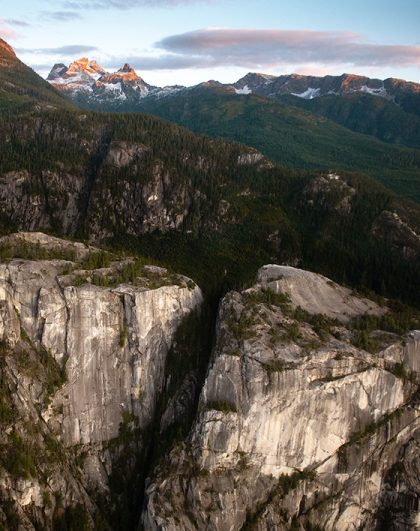
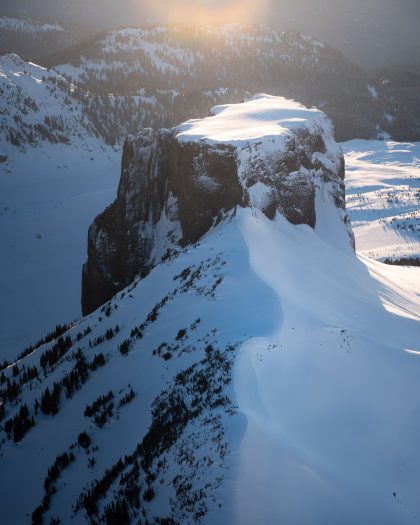
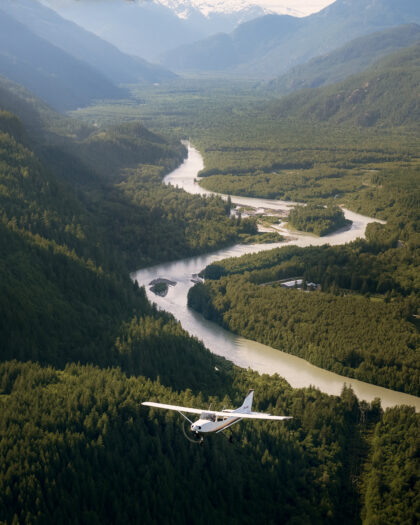
A Squamish scenic flight goes beyond the view and offers a new perspective on British Columbia’s landscape. From above, the landscape is no longer seen in sections. It becomes a connected system where mountains, rivers, forests, and ocean all interact.
Squamish sits at the centre of this system. Positioned along the Sea to Sky corridor, it is surrounded by the Coast Mountains and the fjords of Howe Sound. This unique geography makes it one of the most compelling places in the province to experience from the air.

From the ground, it is natural to experience the region one place at a time. A trail leads to a viewpoint. A road follows the coastline. Each experience feels complete on its own.
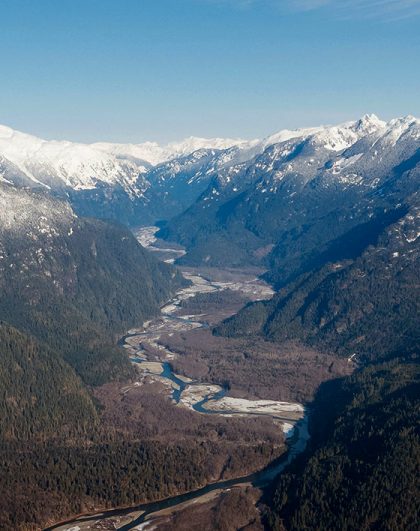
From the air, those same places begin to connect. You can see how glaciers feed into rivers, and how those rivers move through valleys before reaching the ocean. Howe Sound becomes more than a body of water. It becomes part of a much larger system.
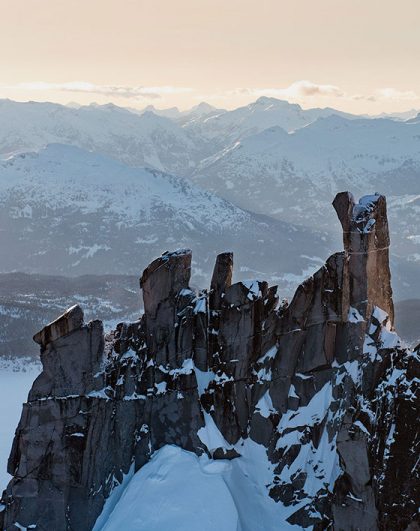
This perspective also brings scale into focus. The Coast Mountains stretch far beyond what is visible from any single point on the ground. From above, the distance between peaks, valleys, and coastlines becomes clear.
At the same time, human structures fade into the background. Roads appear as thin lines, and buildings become almost invisible. This contrast highlights the size and presence of the natural environment.
Together, this shift in connection and scale offers a clearer understanding of how the landscape is shaped, and how it continues to change over time.

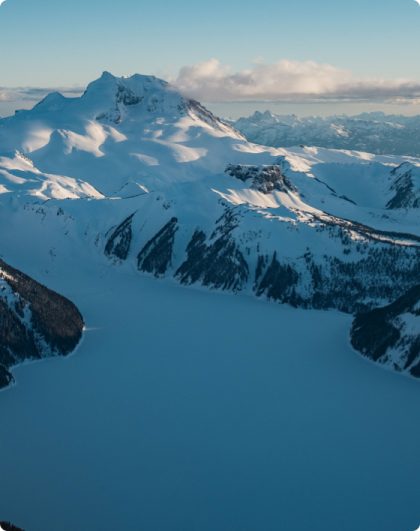
One of the defining aspects of a Squamish scenic flight is access. The flight path reveals remote areas that are difficult to reach on foot. Alpine lakes, glacier fields, and high ridgelines come into view without the need for long hikes or technical equipment.
This does not replace those experiences, but it adds context. It helps you understand how these remote areas fit into the larger landscape and how everything connects.
As the flight continues, the focus often shifts. It becomes less about identifying specific features and more about taking in the landscape as a whole. The combination of elevation, distance, and quiet observation creates space to reflect.
There are moments when the landscape feels still, even as you move through it. This shift is subtle, but it is often what stays with people the most. It moves the experience beyond simply seeing the landscape to understanding it in a more meaningful way.

Seeing British Columbia from above can shift how you think about the landscape. When glaciers, rivers, and forests are viewed as part of one connected system, it becomes easier to understand how changes in one area affect the whole.
This perspective often leads to a stronger appreciation for conservation and more mindful travel. The landscape feels less abstract and more immediate, which can influence how people choose to interact with it.
Every Squamish scenic flight also includes moments that stand out. It might be a quiet view over Howe Sound, light reflecting off a glacier, or a line of mountains fading into the distance. These moments are not always dramatic, but they tend to stay with you.
They leave an impression because they shift how you see the environment long after the flight ends.
A Squamish scenic flight is not just about the view. It is about understanding how the landscape fits together and seeing the region with more clarity. From above, the connections between mountains, water, and forest become easier to recognize, and the scale of British Columbia comes into focus.
This perspective adds context to everything you experience on the ground. It turns familiar places into part of a much larger system and gives you a better sense of how the Sea-to-Sky region is shaped.
If you are looking for a more complete way to experience Squamish, this is one of the most effective ways to do it. Book your Squamish scenic flight and see British Columbia from above.
Head out on this mid-week special! Perfect for groups of up to three, this 30-minute private scenic flight showcases the spectacular landscapes of the Sea to Sky Corridor.
Available Monday to Friday.