Spring in Squamish does not arrive all at once. Instead, it unfolds slowly through elevation, light, and water. In the Sea-to-Sky region, valleys respond first. Meanwhile, the alpine often holds onto winter for weeks longer.
From the ground, these changes appear subtle. However, from the air, the entire transition becomes clear. Forest, mountain, and coastline begin to shift in ways that are easier to see from above.
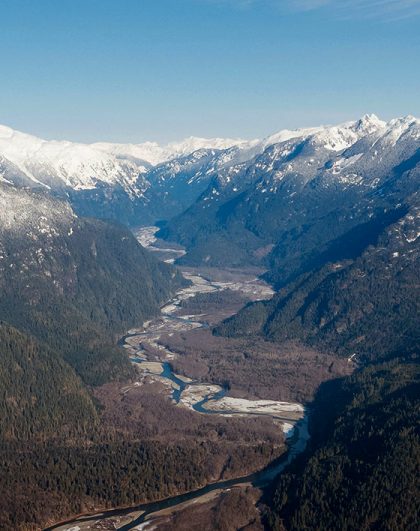
One of the most defining features of spring in Squamish is elevation. Lower elevations begin to soften first. Trails dry out, and forest tones begin to deepen.
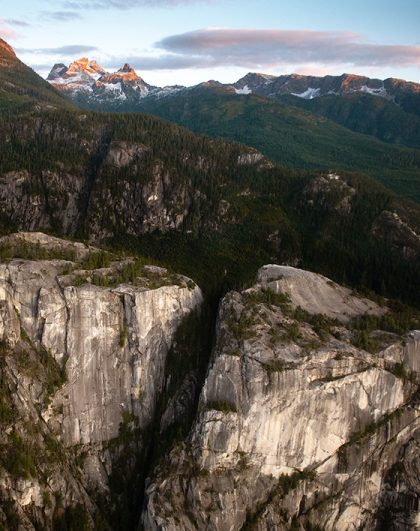
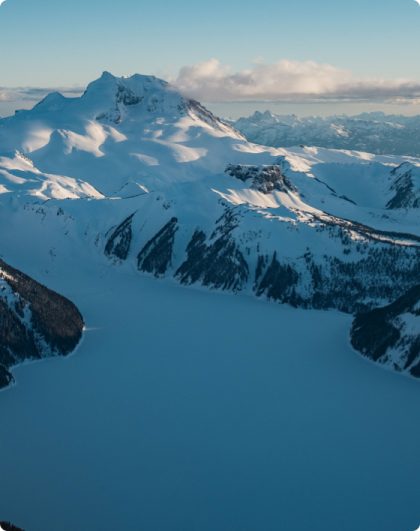
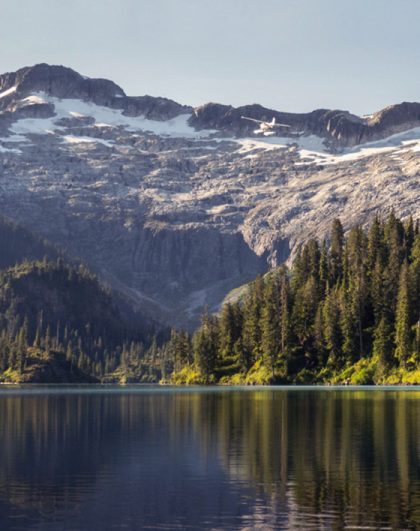
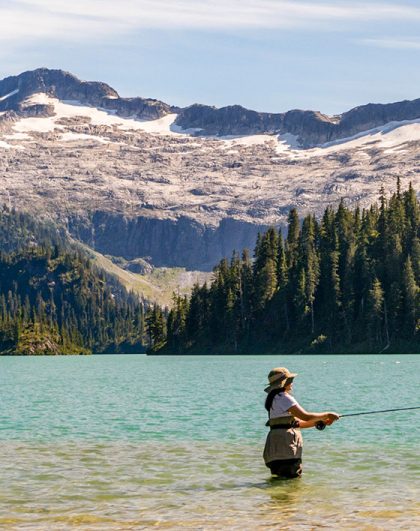
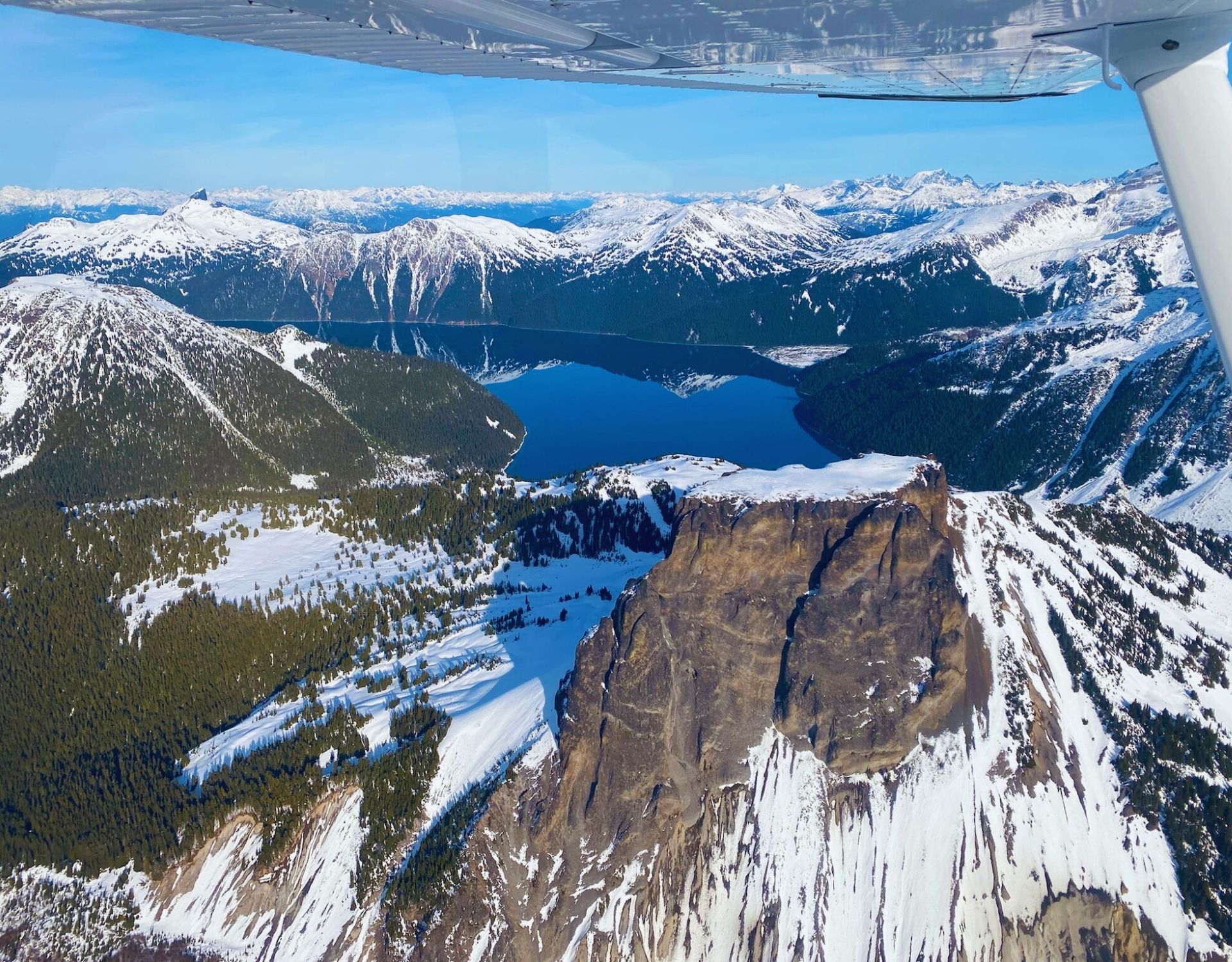
Higher terrain tells a different story. Snow often remains across ridgelines and alpine bowls. As a result, two seasons can exist at the same time. Valleys show early signs of change, while the peaks remain firmly in winter.
This layered transition is what makes the Sea-to-Sky landscape so dynamic.

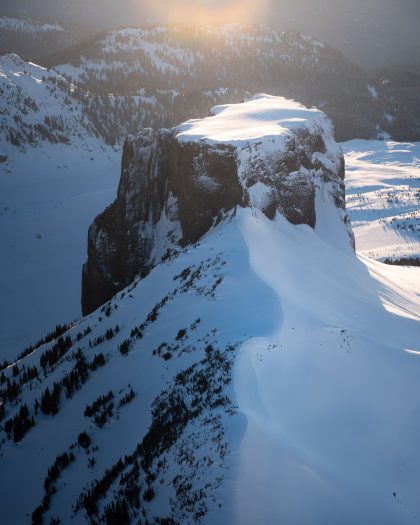
The snowline is one of the clearest indicators that the season is turning. Each week, the white edge moves higher up the mountains.
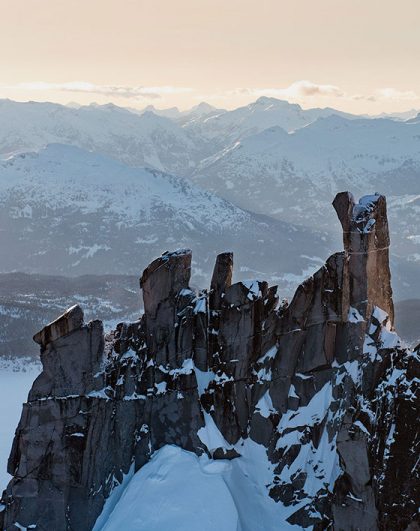
At first, the change feels small. However, over time, rock faces and tree bands begin to appear. As the snowline climbs, the terrain becomes more textured and defined.
From above, this pattern is easy to follow. The movement of the snowline tells the story of spring in Squamish more clearly than almost anything else.
Another early signal of seasonal change is light. Days gradually grow longer, and sunlight reaches deeper into the valleys.
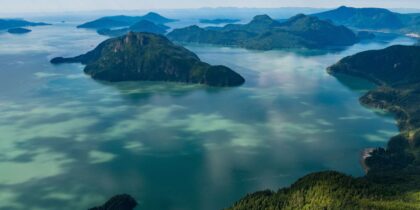
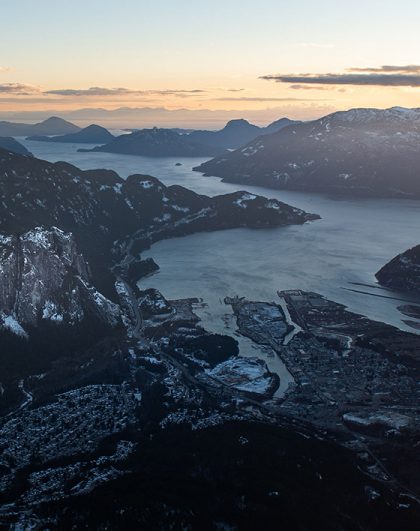
As a result, shadows fall differently across granite faces and forest slopes. Textures that once looked flat begin to stand out. Meanwhile, Howe Sound reflects more light across its surface.
Because of these shifts, early spring often produces some of the clearest views in the Sea-to-Sky region.
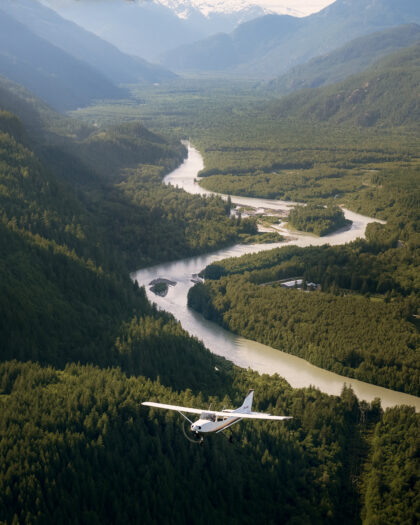
As snowpack slowly melts, water systems begin to change. Creeks and rivers adjust their flow, and drainage patterns become easier to trace.
From above, you can follow these waterways from alpine terrain down to the coast. In other words, the connection between mountains, valleys, and ocean becomes visible.
This relationship is central to the landscape. Spring in Squamish highlights how closely water, elevation, and terrain are linked.
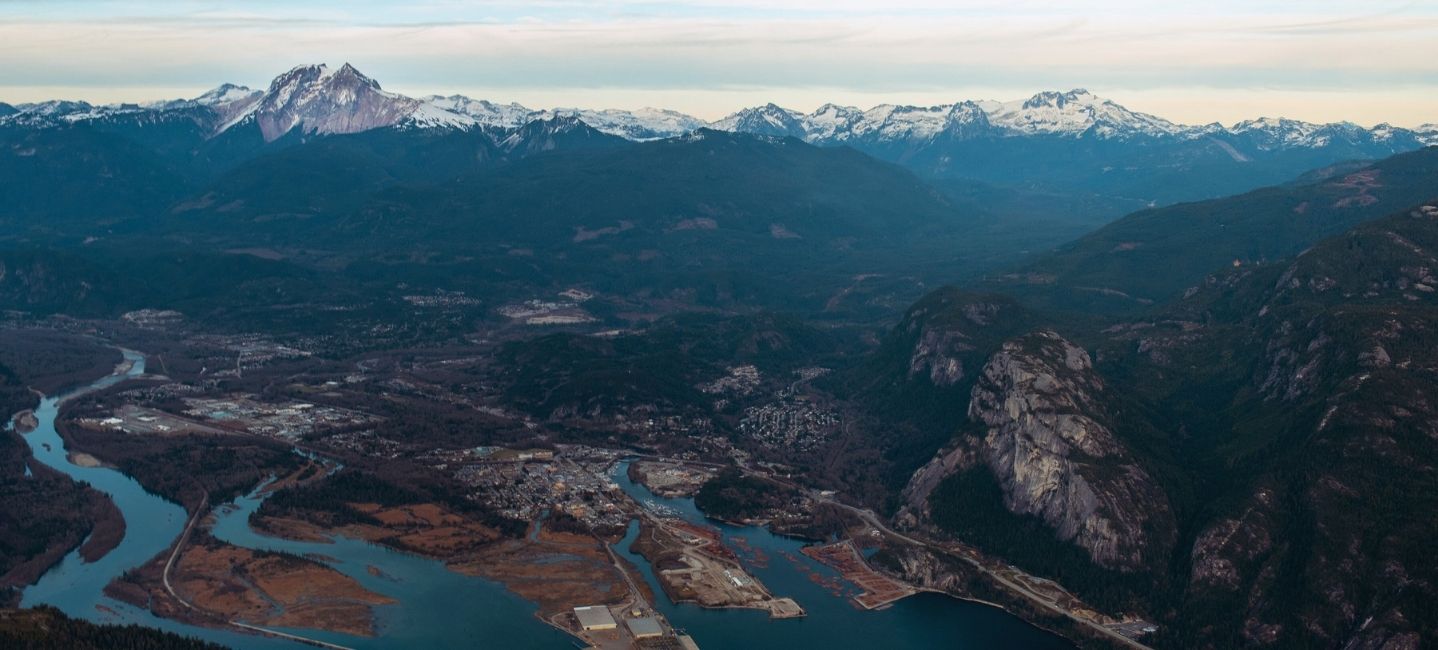
Perspective changes how we understand a place. From the ground, you experience landscapes one viewpoint at a time. However, from the air, the entire system becomes visible.
Valleys connect to ridgelines. Shorelines meet mountains. Forest, water, and rock form one continuous environment.
For visitors, this view provides orientation. For locals, it often reveals details that go unnoticed from the ground.
Spring in Squamish is defined by transition. The snowline shifts, daylight stretches longer, and water begins to move differently through the landscape.
None of these changes happen overnight. Instead, they unfold gradually across the region.
From above, that slow transformation becomes easier to understand. The Sea-to-Sky landscape reveals itself as a connected system, shaped by elevation, water, and time.
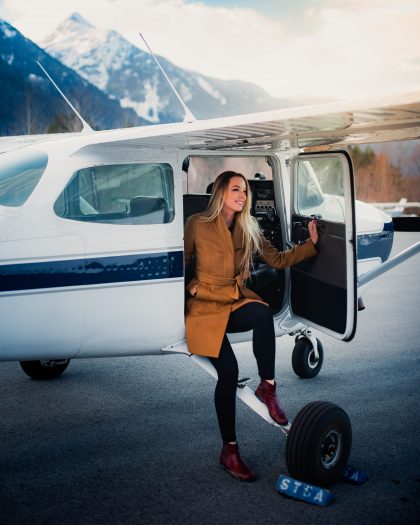
Curious what spring in the Sea-to-Sky looks like from above? Take a look at our scenic flight tours and experience the landscape in transition.