A Sea-to-Sky scenic flight reveals a perspective of the region that simply cannot be experienced from the ground. The Sea-to-Sky Corridor is known for unforgettable scenery, and visitors travel the Sea-to-Sky Highway between Vancouver, Squamish, and Whistler to experience dramatic mountain views, coastal landscapes, and endless outdoor adventure.
From the ground, it is easy to understand why this region leaves such a strong impression. Yet even the best viewpoint only reveals part of the landscape.
You can drive the highway, hike mountain trails, or stop at scenic lookouts along Howe Sound. Each perspective offers something beautiful. But the full scale of the Sea-to-Sky only becomes clear when you see it from above.
From the air, the fjord, mountains, valleys, and lakes connect in ways that are difficult to recognize from the ground. What once looked like separate features becomes part of one remarkable natural system. That broader perspective often changes how people understand and appreciate the Sea-to-Sky.
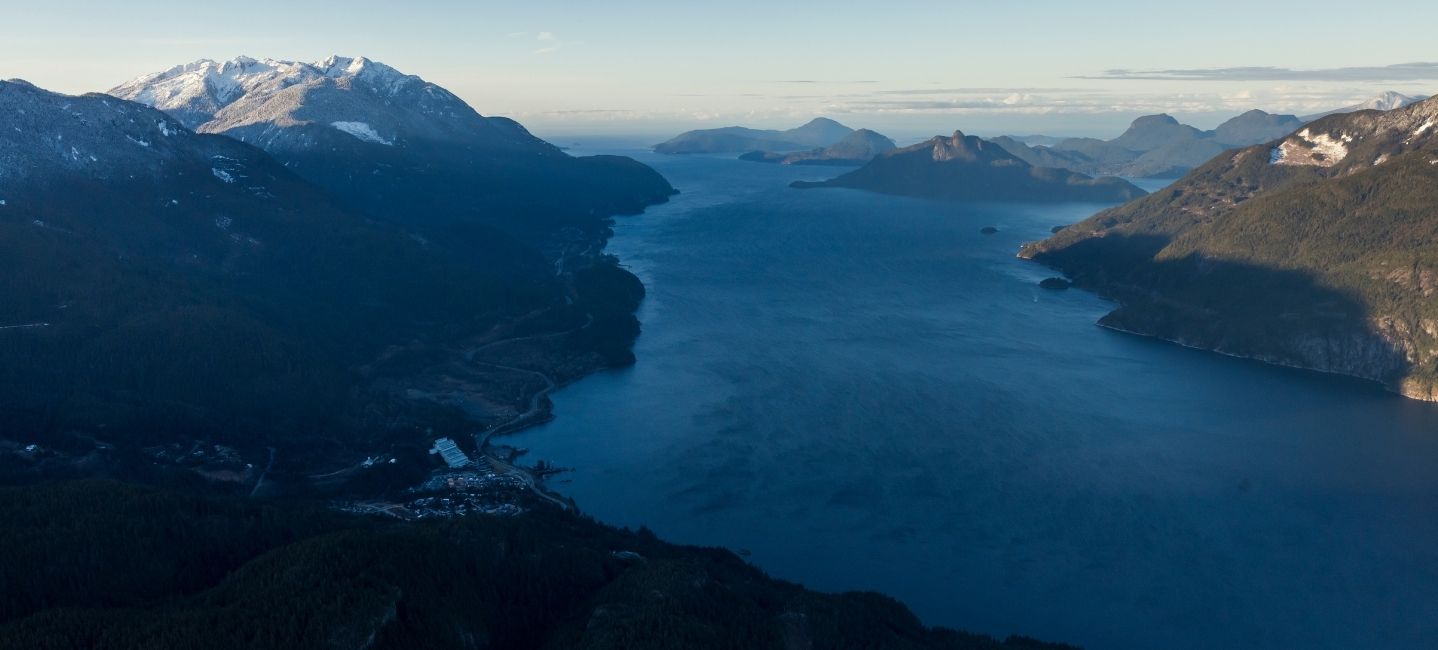
Howe Sound is the defining geographic feature of the lower Sea-to-Sky region. From sea level, it appears vast and dramatic, but its true scale becomes much clearer when seen from above.
The fjord stretches roughly 42 kilometres from the Strait of Georgia to Squamish and was carved by glaciers thousands of years ago. Steep mountain walls rise directly from the water, creating the dramatic landscape that makes the Sea-to-Sky Corridor so distinctive.
A Sea-to-Sky scenic flight also reveals the islands scattered across the fjord. Bowen Island, Gambier Island, and Anvil Island stand out from the water with forested slopes and rugged shorelines. From the air, you can clearly see how these islands fit into the larger structure of Howe Sound.
Understanding the full shape of the fjord helps explain why the meeting of mountain and ocean defines the character of the Sea-to-Sky.
The Sea-to-Sky Corridor sits within the Coast Mountains, one of the largest mountain systems along the Pacific coast. These mountains were formed through tectonic activity and shaped over time by glacial erosion.
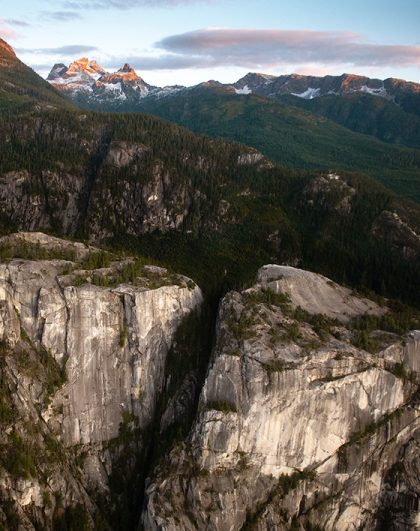
From the ground, peaks like the Stawamus Chief near Squamish appear enormous. The Chief rises more than 700 metres above Howe Sound and is considered one of the largest granite monoliths in the world.
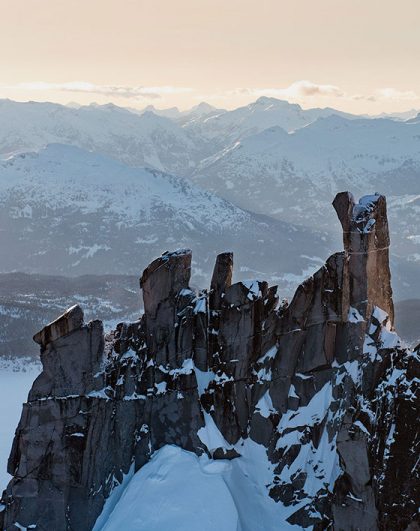
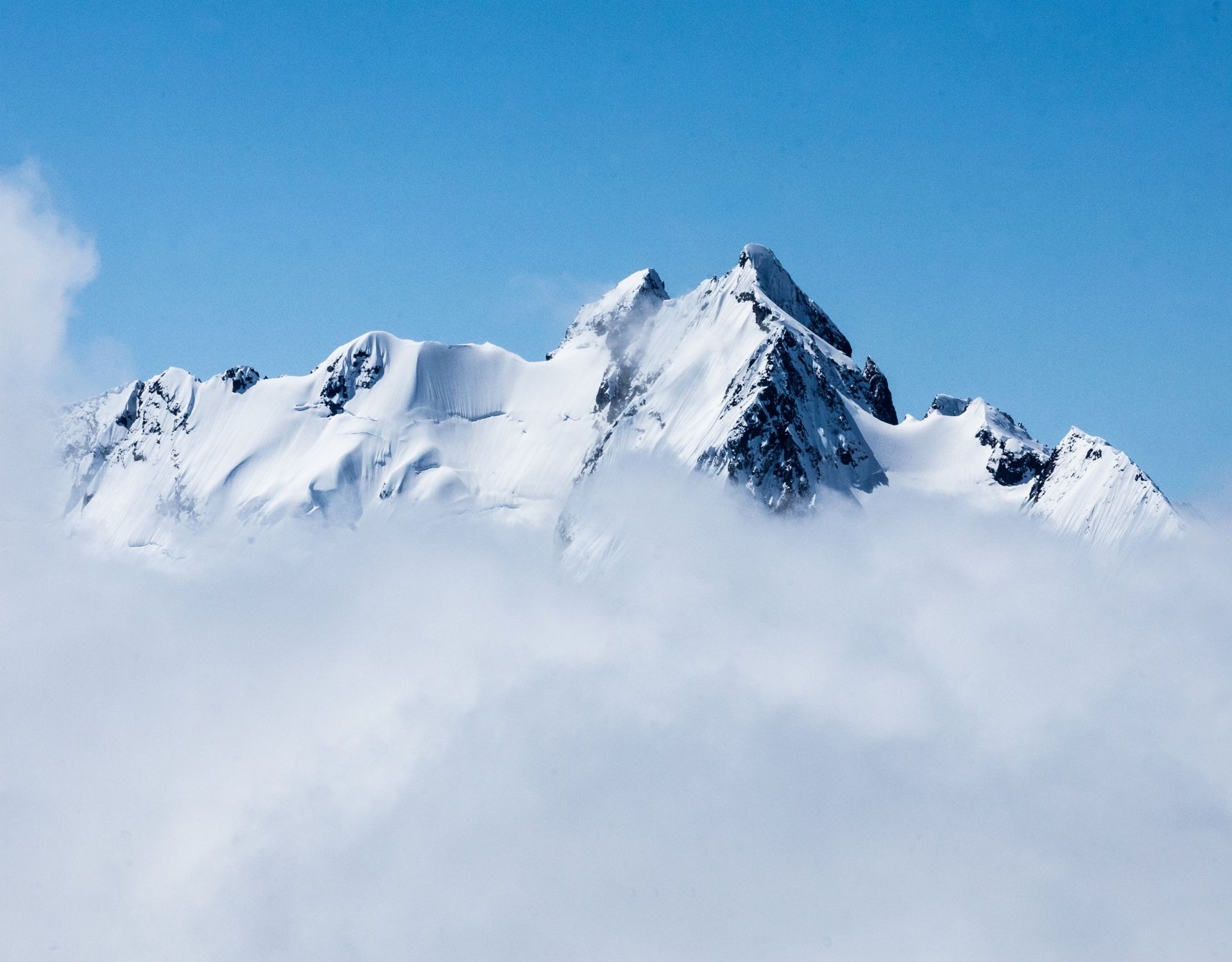
However, a Sea-to-Sky scenic flight reveals how small even the most famous landmarks are within the larger mountain landscape. Ridgelines stretch for kilometres, valleys run deep between granite walls, and alpine terrain continues far beyond what can be seen from any single viewpoint.
This aerial perspective shows the true structure of the Coast Mountains and highlights the geological forces that shaped the region.
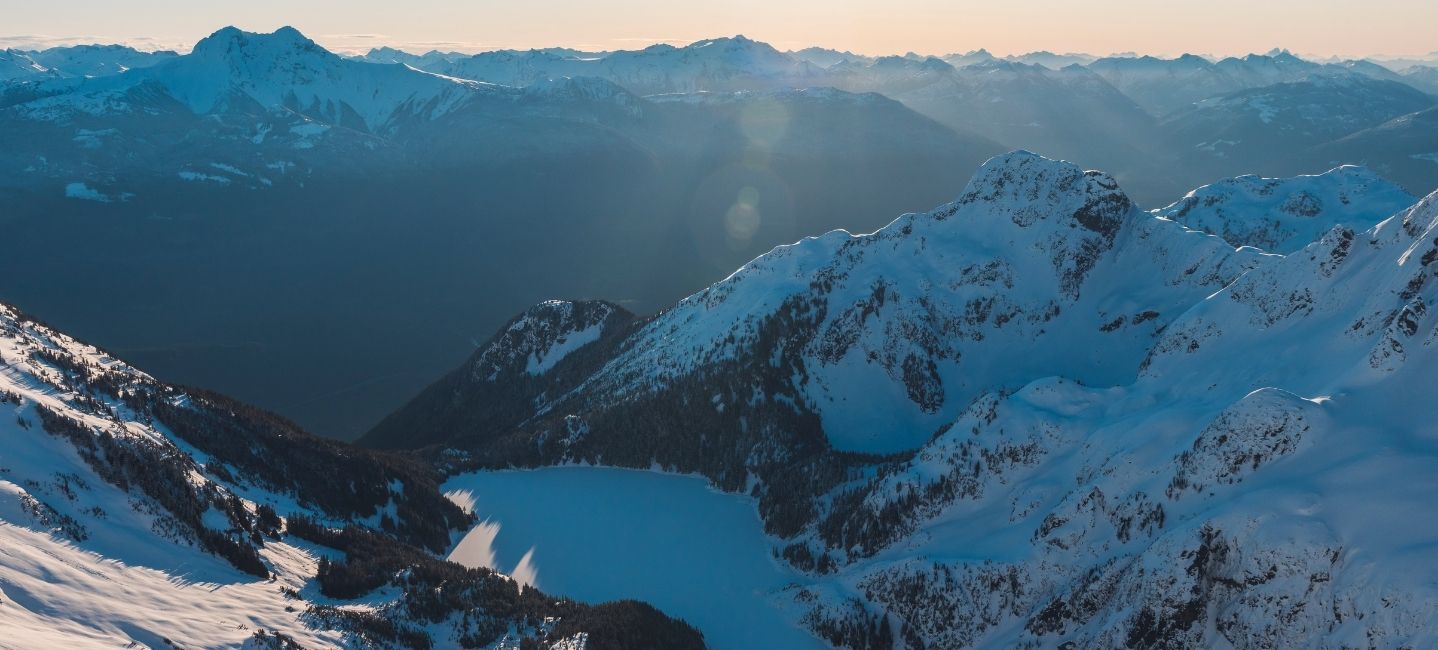
Another fascinating part of seeing the Sea-to-Sky from the air is discovering landscapes that are difficult to access from the ground.
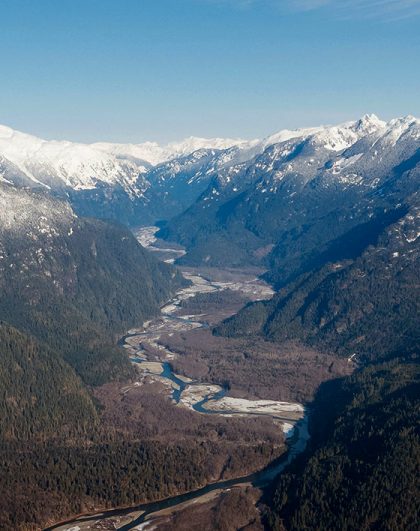
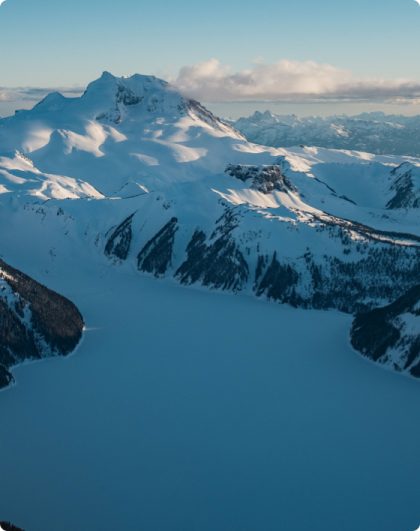
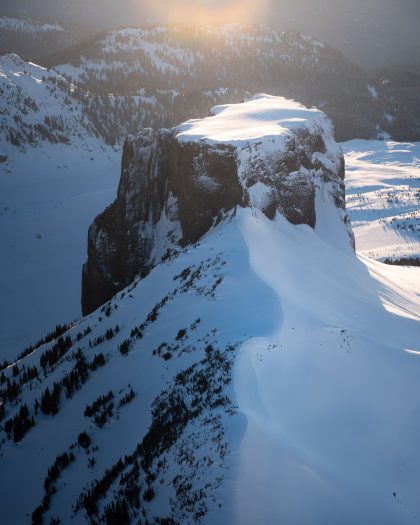
High in the mountains, small alpine lakes sit between ridgelines carved by glaciers. Remote valleys stretch deep into the Coast Mountains without roads or maintained trails. In many places, snowfields remain visible long after the valleys below have warmed.
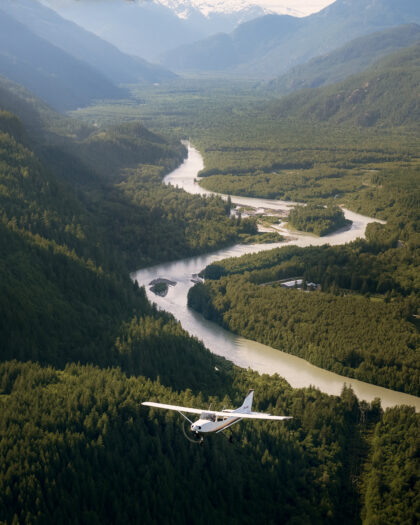
These remote landscapes reveal how water moves through the region. Meltwater from glaciers and alpine basins feeds rivers that eventually flow into Howe Sound.
From above, it becomes clear that the Sea-to-Sky is far larger and more complex than it appears from the highway.
One of the most remarkable aspects of flying over the Sea-to-Sky is watching elevation change in real time.
A flight may begin over the waters of Howe Sound at sea level and quickly climb toward alpine terrain thousands of feet higher. As the aircraft rises, the landscape shifts dramatically. Dense coastal forests gradually transition into exposed rock and high mountain slopes.
At higher elevations, snow often remains on peaks long after it has disappeared in the valleys below.
These elevation changes shape the ecosystems of the Sea-to-Sky region. Climate, vegetation, and wildlife habitats vary dramatically depending on altitude. Seeing these transitions from above provides a clearer understanding of how the landscape functions as an interconnected environment.
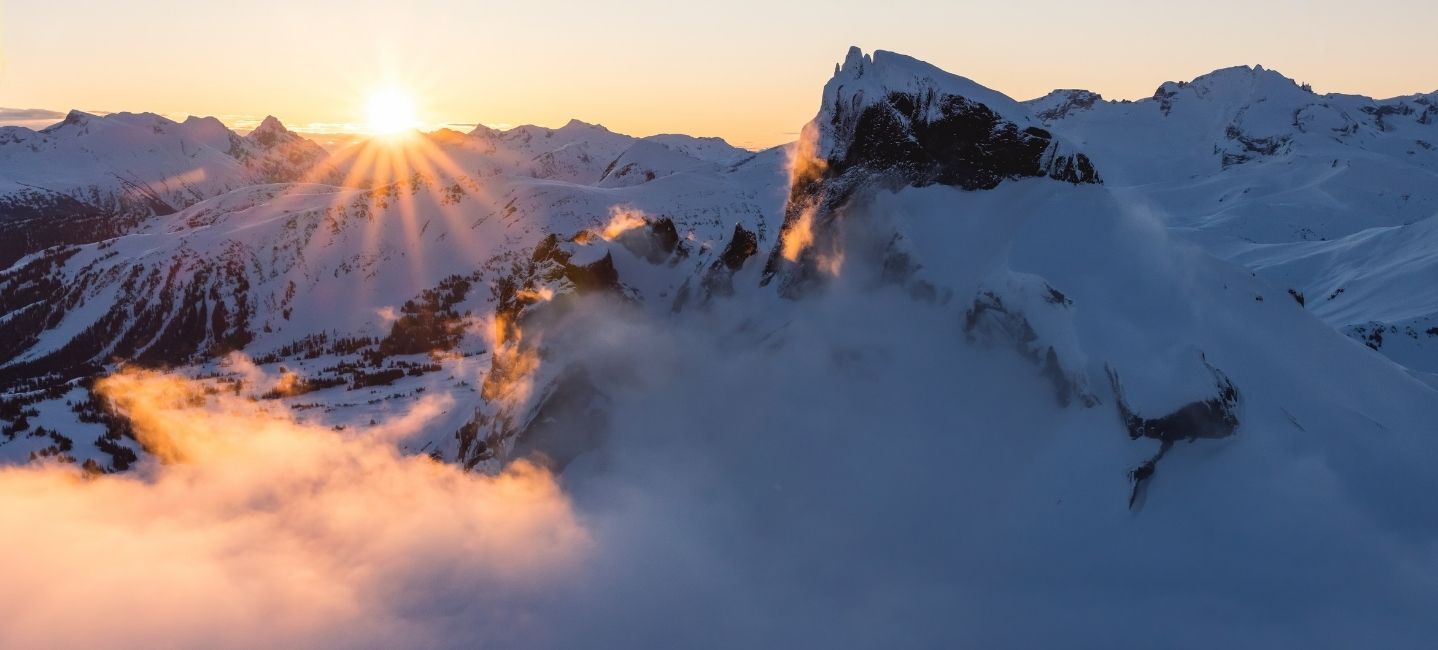
For visitors, an aerial view makes it easier to understand how the region fits together. From above, you can see Squamish at the head of Howe Sound, valleys leading inland toward Whistler, and the Sea-to-Sky Highway following the fjord’s shoreline. What feels separate on the ground becomes clearly connected from the air.
For locals, the view can be just as eye opening. Trails, peaks, and valleys that once seemed isolated become part of a larger landscape shaped by water, elevation, and geology. That is what makes the aerial perspective so meaningful. It is not only beautiful, but also informative.
When you see how glaciers carved the valleys, how rivers flow toward Howe Sound, and how mountains shape the coastline, the Sea-to-Sky becomes easier to understand as a whole. That deeper understanding often leads to greater respect for the landscape and the importance of protecting places like the Howe Sound Biosphere Region.
The Sea-to-Sky is more than a scenic highway. It is a connected natural landscape shaped by geology, water, elevation, and time.
From the ground, visitors experience individual viewpoints. From the air, the entire system becomes visible. Fjords connect to mountain valleys, alpine lakes feed rivers, and glaciers sit sea to skyhigh above the coastline.
Experiencing a Sea-to-Sky scenic flight offers a perspective that helps bring the region into focus. Sometimes the best way to understand a place is to step back and see how everything fits together.
With guided scenic flights and seaplane tours, Sea to Sky Air offers unforgettable aerial experiences above Howe Sound, Squamish, Whistler, and the surrounding Coast Mountains.
Experience the fjords, alpine lakes, glaciers, and rugged Coast Mountains from above with a scenic flight from Sea to Sky Air.
Our guided flightseeing tours depart from Squamish and showcase the breathtaking landscapes of the Sea-to-Sky Corridor, including Howe Sound, Whistler, and British Columbia’s volcanic parks.
Book your scenic flight today and discover the Sea to Sky the way few people ever see it.
Head out on this mid-week special! Perfect for groups of up to three, this 30-minute private scenic flight showcases the spectacular landscapes of the Sea to Sky Corridor.
Available Monday to Friday.